Sequence Adapted Learning
- Common Ideas to Improve Education Outcomes
- Introduction to SAL
- The SAL Feed Back Loop
- Sequence Adapted Curricula
Common Ideas to Improve Education Outcomes
Personalized Education
Personalized learning has multiple interpretations The first interpretation is that of a student self-directing their own education. One student may want to study more computer science, another more about ancient history. Schools of all levels respond to the demand for self-directed learning with electives. Students may choose from a limited set of approved courses which allow students to pursue their interests. In practice, this flexibility is course selection comes as a cost. Counselors are required to review selections, students get confused, and then if students make mistakes in signing up for courses, they may have problems graduating on time.
The second way we can interpret personalized learning is a learning experience that is specifically tailored to the unique needs of the students. In this case, an Individualized Education Plan (IEP) may be developed for just that student. Obviously the administration of IEPs adds a significant layer of administration onto any educational organization. Managing all those individual plans is far more complex than just assigning all students "Freshmen English."
Another interpretation of personalized learning is to teach specifically to a student's learning gaps. Learning gaps are assessed with various tests, identified, and remedied. It is clearly important to address learning gaps when trying to progress as student to the next level.
And yet another interpretation of personalized learning is the learning styles idea. The idea is that students learn very differently from one another, some are audio learners, some visual learners, some hands-on, and so on. In this interpretation of personalized learning, the curricula must be adapted in style to how each student learns. In practice, how exactly are teachers supposed to switch between learning styles in the classroom? Its just not really very easy to achieve. There is also the counter-argument that students who are not proficient at one style of learning, should in fact get better at this learning method. No one really believes students can not grow and develop, so this idea of teaching to a specific learning style has the unintended consequence of locking students into a dominant method of learning, without developing other methods, it seems counter-productive.
Mastery-Based Education
Mastery-based education is an approach where students have to demonstrate a high level of proficiency in each topical area. This idea is a reaction to students being moved from one grade level to the next, approaching more difficult information, without having mastered the fundamentals required.
Implementing Mastery-based education is a beneficial approach which is highly likely to improve poor education outcomes, since it would be very unlikely that a student who failed Algebra 1 is ready for Algebra 2.
Project Based Learning
In project-based learning methodologies, students work together in groups on a project. Proponents contend that students working on a project together will integrate ideas and concepts and learn valuable social skills when working in a group.
Traditionally speaking, the original project-based learning method was the lab report. Students worked in groups to do the lab, but they each did their own lab report. The lab report integrated the ideas and concepts in the lessons. Lab reports are still great ways to practice collaboration and integration ideas and concepts.
The lab report aside, project-based learning is mostly wasted time. In practice, one student will pull the rest along, and contribution is rarely evenly distributed.
Social-Emotional Learning
Shorted to the abbreviation of SEL, this idea is probably the newest approach proposed to improve outcomes. Great teachers are supposed to weave SEL into their classrooms. In addition to teaching math and science, teachers who implement SEL are supposed to teach students how to manage their own feelings and emotions, and to increase a student's emotional intelligence. While there could be nothing wrong teachers helping students deal with their anxiety, is a teacher equipped for these goals? In a classroom of 30 kids, how much SEL is really going to take place, and is it feasible to rely on SEL being properly implemented in the classroom to improve academic outcomes?
The Best and Worst of These Ideas
All of these ideas have some merit or reason why many view them as beneficial to academic outcomes. It would be wonderful for teachers to establish a connection of mentorship with students in an environment of lower anxiety, which would no doubt help students concentrate on their lessons. However, asking a professional teacher to now become almost a therapist sounds like difficult to achieve. While most project-based learning assignments are a waste of time, lab reports are terrific at integrating concepts. Of course, it is ridiculous to keep moving students along if they failed lower level courses, so mastery-based learning is an important component of success. Mastery-based education does have its challenges, we can't just keep failing students in grade levels when they don't come up to the mark as the social pressure becomes destructive and works against student progression. Regarding personalization, it is very important to address individual learning gaps, as every student has a unique set of knowledge they bring with them to each course. However, trying to adapt to a student's strengths in learning styles seems counter productive when the goal is to make the student stronger in all areas.
Considering the best and worst of these common approached to improve education outcomes, Sequential Adapted Learning is a common-sense method to achieve outstanding academic performance from students.
Introduction to SAL
Sequence Adapted Learning (SAL) is a method of ensuring that students follow the school's defined scope and sequence of curricula while addressing the widely variable capabilities of each student.
SAL ensures that all students learn sequentially, never putting the 'cart before the horse.' SAL also adapts to the student's individual needs through assessment and placement to address leaning gaps. SAL adapts to the student, so that the student can achieve greater success by learning sequentially.
SAL is Unique
SAL differs from personalized learning in that the student follows the scope and sequence that is the hallmark of the school itself, there are no student-directed education choices. SAL also differs from personalized learning in that there is no focus on differing learning styles. Students are expected to learn the material as developed and identified by the school. However, SAL does address learning gaps at its core, so in this understanding of personalized education, SAL is indeed personalized and adapts to the student's individual needs.
Sequential learning requires a mastery approach in the core competencies required to continue up the education ladder. Fundamentals are advanced according to the school's sequence of learning. However, SAL does not tie competencies strictly to grade level, so students may progress in grade levels but still progress logically through the sequence of competency. SAL establishes periodic gates in a student's academic development where core competencies must be evidenced in order to proceed to more challenging courses.
Regarding project-based learning, SAL really does not address this concept, but does not preclude it. Further, SAL does not address Social-Emotional Learning, except in its outstanding ability to achieve excellent academic outcomes, which produces happier, less anxious, and more confident students without the therapy training. When students are more successful at school, there is less emotional pressure on the classroom.
Readiness
SAL address the main challenge to getting all students to achieve, their course readiness rather than their differing learning styles. Grade Level is basically a student's age, and so in traditional education approach, students are assigned material mostly based on how old they are, not how ready they are for that material. SAL treats readiness as the primary driver of successful achievement outcomes.
Consider a group of high school freshmen planning to take Algebra 1. If a school gives an Algebra readiness exam, experiences teachers would not be surprised to find a small set of students who are actually ready to take Algebra, many students who are almost ready, and most others would not have a basic understanding of arithmetic. After just the first week of school, it is sad that it is no mystery to the Algebra teacher which students will likely fail the class.
No student is bad at math, but most students are not ready for the math class they are taking. SAL does not assign courses to students who do not have the fundamentals to be successful in those courses. This principle is obvious, but given that we have a system of education that requires transcripts, units, credits, grades, certifications, standards and more, it can be quite complex to achieve in practice.
Rate and Dedication
Some students are more dedicated than other students, some put in the time into their studies, others less so. If a student is ready for the course, it is the time that a student puts into a course that drives the outcome more that any other factor. SAL considers that the first driver of outcome is readiness, but that the second driver is dedication.
Differing course dedication introduces the problem of variable time to complete the course. If a student is not putting in the time, the student will not get to the competency level needed for the next course in the same amount of time as the diligent student. For this reason, for mastery based learning system to be implemented, it must be flexible in the time allotted to a student to complete the work required. Of course, this quickly becomes an administrative nightmare when considering how to create a student transcript.
Additionally, many students have complex medical issues which reduce the total amount of time they can spend on a course. These students not only face the challenge of their medical problems, they also get penalized academically. While SAL does not directly address the proposed issue of learning styles, there certainly are those students who are always going to require more time to complete their work on account of a wide set of diagnosed learning challenges.
If all students are required to complete the same course in the same amount of time, the whole purpose of mastery-based learning is defeated for those students who did not complete the course in the time allotted.
SAL Embraces Computer-Based Learning
There is no practical way to ensure readiness, gap learning, and rate flexibility without computer-based learning. Traditional classroom-based teaching can in no way adapt to the highly-varied readiness of incoming students, nor provide flexibility in the rate of completion of the learning material. SAL effectively uses computer based learning for assessment, placement, individualized gap learning and completion rate flexibility.
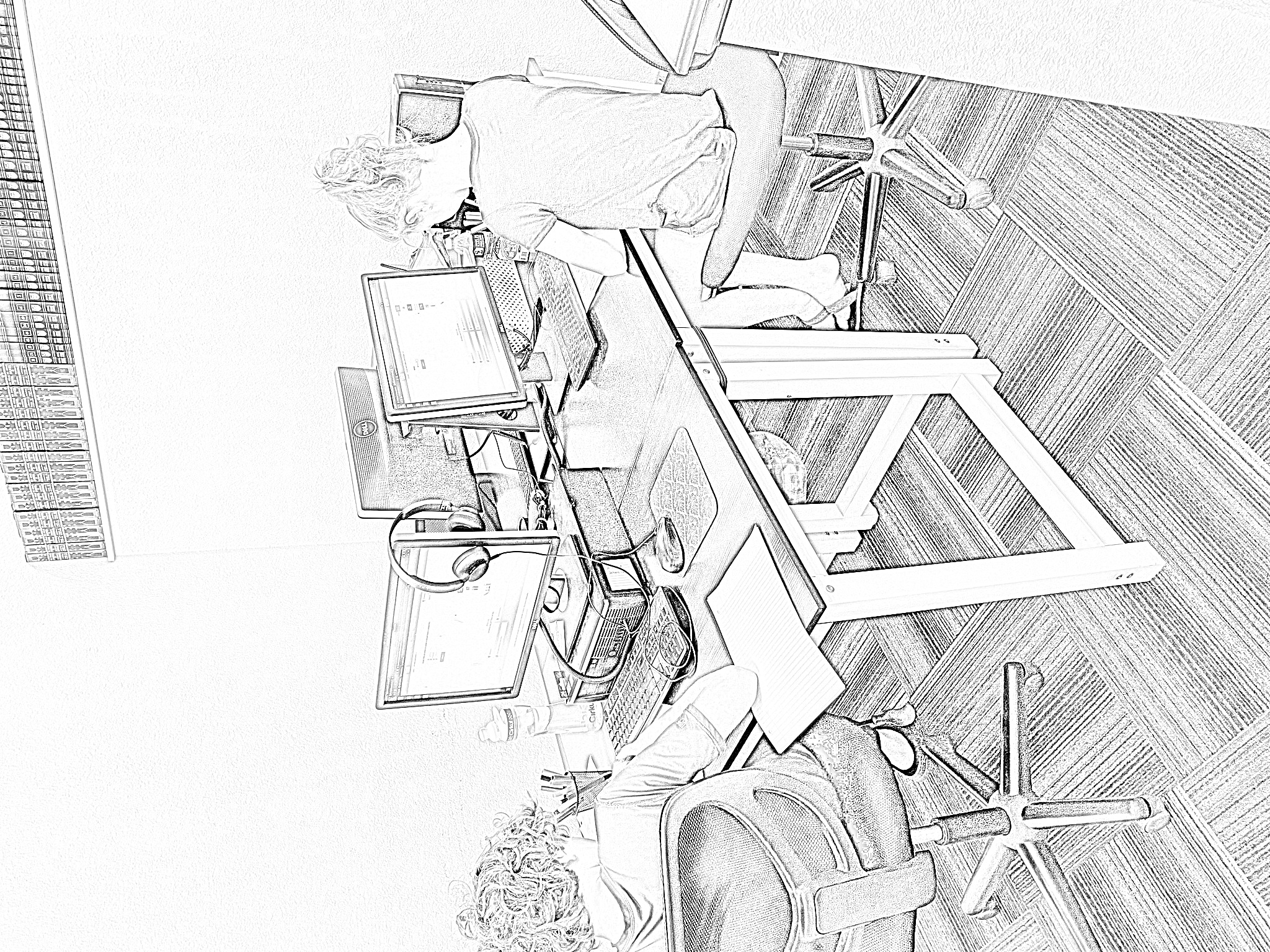
However computer-based learning does not mean that all students are remote. Just like a modern office settings, school can establish learning centers, like a 'school-office' where students gather to learn valuable social interactions and get as-needed help from teachers and teaching para-professionals.
The SAL Feed Back Loop
Traditional Open Loop Education
Traditional education does not adapt the student's learning experience to the capabilities and dedication of the student. The material is assigned and the outcomes recorded.

When all third graders are assigned the school's standard third grade curricula, the classes a student takes is solely based on the age of the student. The outcome of the class is recorded by the teacher in the grade the student receives. As long as the student skates by with a D, the student will progress to the next grade level, in many cases learning very little.
At the end of the year, or close to the end of the term, schools conduct assessment testing. The assessment testing is meant to help the school improve it academic outcomes by measuring student success. However there is no way to adjust any aspect of an individual student's learning experience based on these aggregate assessments; only rarely is there a specific decision made on behalf of a student based on these assessments.
In a traditional approach, schools do assessments to tell the community how their students are performing. The idea that assessments can be used to change a student's learning experience is not widely implemented in practice.
The Feed Back Loop
SAL establishes a feedback loop that incorporates administration, transcripts, credits, curricula and assessment data and processes to achieve consistent educational outcomes.

This type of feedback loop is common to all engineered systems, and is sometimes referred to as "continuous improvement" in the context of business processes. The information obtained from an assessment is directly used to modify the learning experience of the students, in complete contrast to how assessment data is more commonly used, to give a school's report card.
For the feedback loop to operate, the assessment of the student must be first completed before placing a student in any course. For student's transferring mid-term, as is quite common, the school can not rely on 'assessment week,' and so assessment must be a key element of the student intake process at any time the school accepts new enrollment.
Challenges
Implementing an intake assessment increases the administrative handling of a new student, and potentially the cost. The SAL feedback loop injects a decision point into the process prior to class enrollment. Normally, prior to class enrollment, student processing is purely business administrative, checking the forms are complete, checking fees are paid if private, requesting prior school records, and so on.
SAL requires a decision to be made for each individual student on the most appropriate academic program, and so it must facilitate integrating people with educational programmatic expertise into the process.
Sequence Adapted Curricula
In order for a school to implement the SAL Approach, the curriculum needs to be adjusted. In reality, the curriculum approach is more streamlined with a SAL school. Each course represents a specific block of knowledge, there is no need to keep repeating content in the classes. Each class is not burdened with the need to review a wide variety of pre-requisite material, and students are never placed in classes they are not ready to take. The class syllabus can assume a common level of knowledge has been achieved by enrolled students.
Eliminate Boring Review Material
At the beginning of each new school year, the curricula usually provides endless review of previous content. This is an essential tool to bring up students who are not ready for the course. The down side is that advanced students are bored out of their minds and mentally check out of the course, eventually never checking back in. Another downside is that teachers rarely get through the new material and students just keep learning less and less.
Develop Unique Courses
Sequence-adapted curricula does not contain a significant duplication of past content in each course, each course presents new and unique material. When students are carefully placed in their courses through the intake assessment process, all students experience challenging material within their grasp.
However, a school, may want to re-enforce certain concepts, and include the same material in multiple courses. The desire to re-enforce learning is different than reviewing past concepts at the cost of learning new material. Sequence-adapted curricula may well contain repeated lessons for the purpose of re-enforcement.
School Driven Syllabi
SAL schools look at their collective set of syllabi as the school's own educational program, ensuring the the each class covers the material in the planned sequential order. Where traditional schools level the syllabus to the teacher to develop, the SAL approach transfers the development of each class syllabus to the school as a whole. This transfer of responsibility is essential to ensure that students are truly prepared for the next level of learning, and that all students start the class off with the minimum readiness level.
Intake Assessment tied to the Curricula
In order to make decisions about the courses a student is ready for, the student must take an assessment prior to enrollment in those classes. The results of the assessment must be able to point to the courses the student should be assigned if the assessment is to be useful. SAL tightly connects the assessment with the class readiness expectations.
Specialized Intensive Coursework
In cases where a student is falling way below the mark, specialized intensive coursework must be developed so that students can get back on track. This coursework should cover the bare-bones sequence of educational content required to bring the student back to normalized performance.
SAL schools have demonstrated that all students greatly improve with an intensive course focusing on their learning gaps, and most are restored to normalized performance within a term or two of specializing learning.
Sequence-adapted learning can not be properly implemented unless the 'intensive courses' are developed and made available to specific students who are in need to remedial education.